Writing a strong blog post is only part of the equation. If a post isn’t structured for search, it’s unlikely to reach the readers it was written for.
At Query House, we focus on building content strategies that help businesses become visible in organic search. A clear SEO checklist for blog posts ensures each article is structured to perform well in search results while still delivering real value to readers.
The goal isn’t to “optimize” content after the fact—it’s to build SEO into the post from the beginning. Below is a practical checklist to review before publishing any blog post.
What Is an SEO Checklist for Blog Posts?
An SEO checklist for blog posts is a step-by-step process used to optimize blog content before publishing. It ensures that each post includes key on-page SEO elements such as keyword placement, heading structure, internal links, meta descriptions, and optimized images.
Following a consistent checklist helps blog posts rank more effectively in search engines while improving readability and user experience.
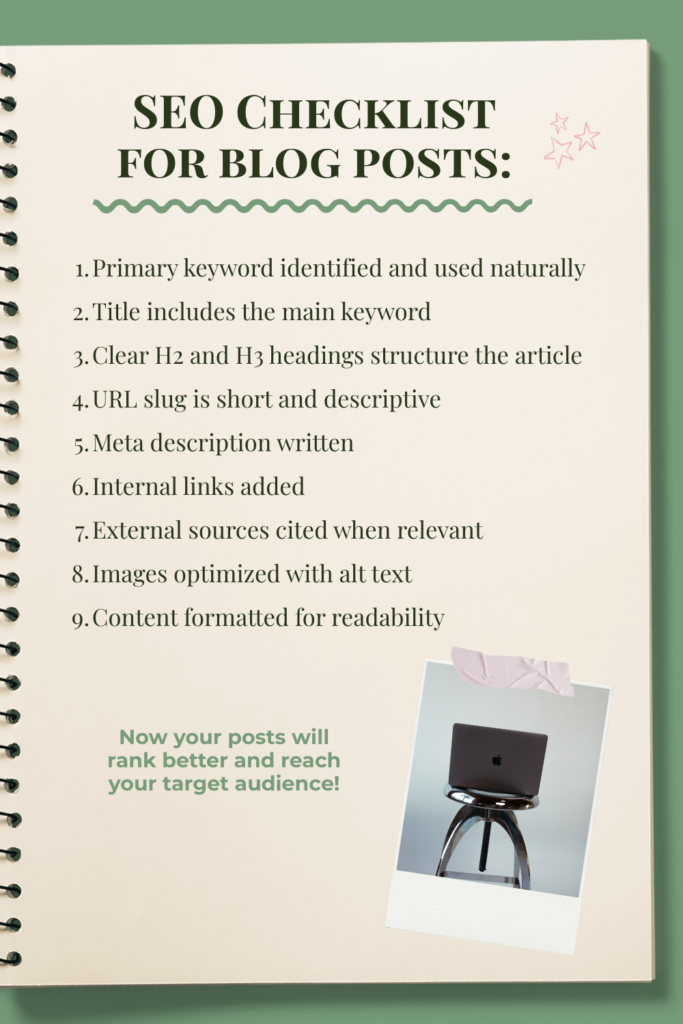
Quick SEO Checklist for Blog Posts:
Before hitting publish, review this checklist:
- Primary keyword identified and used naturally
- Title includes the main keyword
- Clear H2 and H3 headings structure the article
- URL slug is short and descriptive
- Meta description written
- Internal links added
- External sources cited when relevant
- Images optimized with alt text
- Content formatted for readability
Consistently following this SEO checklist for blog posts helps ensure that each article is built for both search visibility and reader experience.
Start With Search Intent and Keyword Research
Every post should begin with a clear search goal. What question is the reader asking, and what type of answer are they expecting?
Choose one primary keyword that reflects that intent. In this case, the keyword is SEO checklist for blog posts.
Before writing, review the current search results for that keyword.
- What format do the top-ranking posts follow?
- Are they lists, tutorials, or step-by-step guides?
- What topics do they consistently cover?
This quick review helps ensure your post aligns with what search engines already understand users want.
You can also identify a few supporting keywords, such as:
- blog post SEO checklist
- SEO optimization for blog posts
- how to optimize a blog post for SEO
These supporting terms help reinforce the topic naturally throughout the article.
Write an SEO-Optimized Title
The title is one of the strongest signals for both search engines and readers.
A strong title should:
- Include the primary keyword
- Clearly describe what the post offers
- Stay under roughly 60 characters if possible
For example: SEO Checklist for Blog Posts: What Actually Improves Rankings
Avoid titles that try to be overly clever. Clear, direct titles tend to perform better in search.

Structure the Post With Strategic Headings
Good structure helps both readers and search engines understand your content.
Use headings intentionally:
- H1: The main title of the post
- H2: Major sections of the article
- H3: Supporting subtopics within sections
Headings should guide the reader through the content logically. They also create natural places to incorporate relevant keywords.
For example, this article uses sections like:
- Start With Search Intent
- Write an SEO-Optimized Title
- Structure the Post With Strategic Headings
This structure improves readability and helps search engines interpret the page.
Optimize the URL Slug
The URL should be short, descriptive, and focused on the main keyword.
Instead of a long or generic URL like:
/blog/how-to-write-and-optimize-blog-posts-for-search-engines
A cleaner version would be:
/seo-checklist-for-blog-posts
Short URLs are easier for both users and search engines to understand.
Write a Clear Meta Description
The meta description is the short summary that appears beneath your page title in search results. While it doesn’t directly impact rankings, it strongly affects click-through rates.
A good meta description should:
- Be around 150–160 characters
- Include the primary keyword
- Clearly explain the benefit of the article
Example:
Use this SEO checklist for blog posts to optimize your content before publishing. Learn the key steps that help blog articles rank and perform in search.
Use Internal Links Strategically
Internal linking helps search engines understand how your content connects across your site.
Within each blog post, look for natural opportunities to link to:
- Related blog articles
- Service pages
- Foundational guides
For example, a post about an SEO checklist for blog posts might link to:
- A guide on keyword research
- A post about on-page SEO
- A resource on content strategy
For example, if you’re wanting to learn more about how SEO interacts with the entire digital marketing ecosystem, check out my post: Digital Marketing for SEO: How Search Powers Long-Term Growth.
These connections strengthen topical authority and help readers explore more of your content.
Add External Links to Credible Sources
External links can strengthen the credibility of a post when used thoughtfully.
If you reference research, statistics, or industry practices, link to the original source. This signals that your content is grounded in reliable information. The key is moderation. A few relevant links are helpful; too many can distract from the main topic.
Optimize Images and Alt Text
Images improve engagement, but they should also support SEO.
Each image should include:
- A descriptive file name
- Clear alt text that explains the image
Example:
File name:
seo-checklist-blog-posts.png
Alt text:
SEO checklist for blog posts showing optimization steps before publishing
Alt text helps search engines understand images and improves accessibility for readers using screen readers. Also, compress images to maintain fast page speed.
Frequently Asked Questions:

How long should a blog post be for SEO?
Most SEO-focused blog posts perform well between 1,200 and 2,000 words, depending on the topic. The goal is to fully answer the search intent while remaining easy to read and structured with clear headings.
How many keywords should a blog post target?
A blog post should focus on one primary keyword supported by several related terms. This helps search engines clearly understand the topic without over-optimizing the content.
When should SEO optimization happen?
SEO should be part of the writing process, not an afterthought. Using an SEO checklist for blog posts ensures the article is structured properly before it is published.
Why This SEO Checklist Matters
SEO doesn’t require complicated tactics. Most high-performing blog content follows a clear structure, answers a specific search intent, and is easy to read.
A simple SEO checklist for blog posts ensures those fundamentals are in place every time you publish. Over time, that consistency compounds—helping your content build authority, attract organic traffic, and reach the audience it was meant for.

Leave a Reply